
Why this page exists
The Numbers explains Crosby's budget. This page is the rest of the story — where the town came from, who lives here today, and how Crosby fits into the small cluster of towns around it. It's meant to read like something you'd hear across a kitchen table, not a textbook.
Nothing here is a leak or an opinion piece. It draws on the city's own history page, Wikipedia, the Minnesota Historical Society, U.S. Census data, and local newspaper coverage, and every claim is linked so you can check it yourself.
Iron, water, and a boom-and-bust town
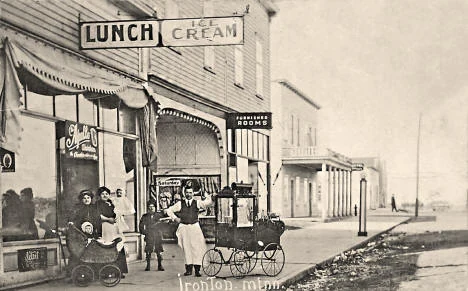
The Cuyuna Iron Range — the westernmost and youngest of Minnesota's three iron ranges — was discovered almost by accident. Surveyor Cuyler Adams noticed his compass needle deflecting strangely while surveying in 1895, and confirmed iron ore by drilling in 1903. The range's name fuses the first three letters of "Cuyler" with "Una," his dog (Wikipedia: Cuyuna Range).
Mining businessman George H. Crosby secured land near Rabbit Lake in 1905 and founded the townsite that carries his name. Built expressly as a mining town, Crosby was incorporated in July 1910 and reached roughly 3,000 residents almost immediately; its twin city Ironton followed a year later (Wikipedia: Crosby, Minnesota). At its peak the range had about 32 operating mines, and the ore's unusually high manganese content — used to harden steel — made it strategically important in both World Wars (MinnPost: A brief history of mining on the Cuyuna Iron Range).
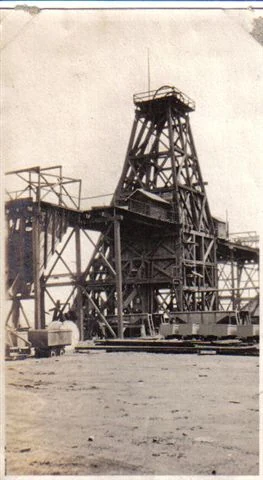
The Milford Mine disaster
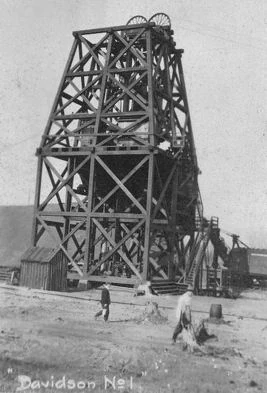
On February 5, 1924, a surface cave-in at the Milford Mine — a few miles north of town — breached mud connected to Foley Lake. The 200-foot-deep workings flooded to within 15–20 feet of the surface in under twenty minutes. Forty-one miners died; only seven escaped. It remains Minnesota's deadliest mining disaster. The site is now Crow Wing County's Milford Mine Memorial Park, with interpretive signage naming all 41 victims, and the 100th anniversary was commemorated in February 2024 (MNHS/MNopedia; LPTV, 100-year retrospective).
The Communist mayor
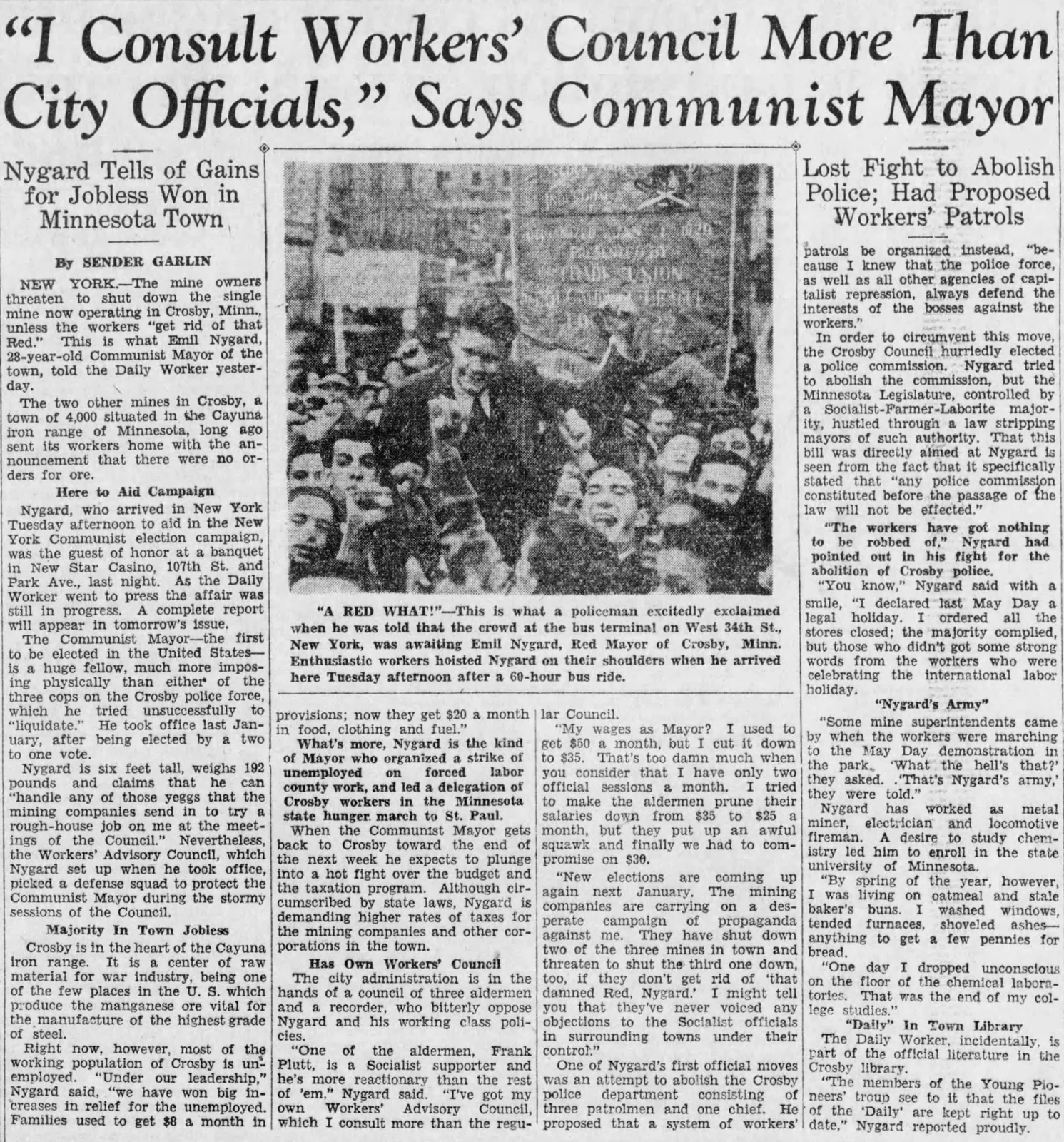
On December 6, 1932, 27-year-old Karl Emil Nygard — the son of Swedish-speaking Finnish immigrants and a Communist Party member — won the Crosby mayoralty on the Workers Ticket, after two prior losses. Inaugurated January 3, 1933, he is generally credited as the first Communist mayor in the United States and served one year. The episode reflects the deep labor radicalism of Cuyuna's immigrant mining workforce during the Depression, and Crosby's own city history page acknowledges it (Wikipedia: Karl Emil Nygard; cityofcrosby.com).
Local pride footnote: in 1957, Air Force Major David G. Simons launched the Project Manhigh II balloon from the Portsmouth mine pit, reaching roughly 102,000 feet — an early stratospheric flight that fed the U.S. space program (Wikipedia).
Decline, then a second act
Cheaper, safer taconite mining on the Mesabi Range undercut Cuyuna's deep underground mines. Seventeen Cuyuna mines closed between 1961 and 1965, and in 1967 the last operating underground mine in Minnesota shut down near Crosby. Downtown spent decades best known for antique shops (MinnPost; Star Tribune).
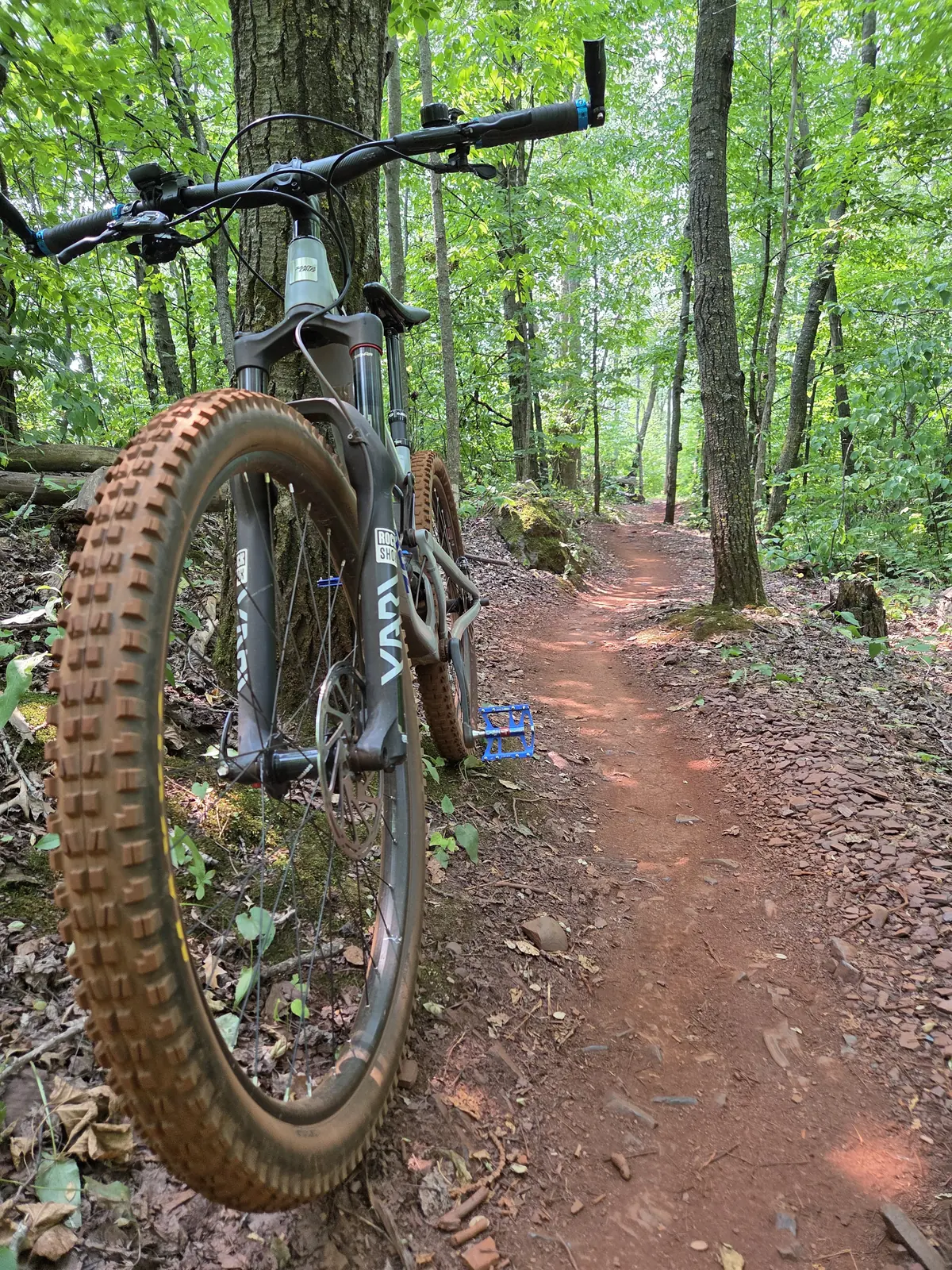
The old mine pits, abandoned and left to fill with groundwater, turned out to be strikingly clear, deep lakes — Portsmouth Mine Pit Lake is considered Minnesota's deepest. The state built Cuyuna Country State Recreation Area on the reclaimed mineland in 1993, and the first purpose-built mountain bike trails opened in 2011. The system has since grown to roughly 70 miles and is an IMBA Ride Center at the silver level (Wikipedia; MN DNR). Visitation topped 400,000 in 2023; trail advocates say Cuyuna is now the most-visited state recreation area in Minnesota (Star Tribune).
Who lives here now
Crosby today is two things at once: a resident base that is older, poorer, and less educated than the Minnesota norm, and a visitor economy that has genuinely transformed downtown. Both are real, and they don't fully overlap.
| Measure | Crosby | Minnesota |
|---|---|---|
| Population (2020 census) | 2,360 | 5.706M |
| Median age | 52.3 | 38.8 |
| Median household income | $41,554 | $89,062 |
| Poverty rate | 16.9% | 9.3% |
| Bachelor's degree or higher | 16.8% | 39.4% |
ACS 2020–2024 five-year estimates. Sources: Census Reporter, Crosby profile; Data USA.
Who employs people here
Cuyuna Regional Medical Center is the anchor employer — founded in 1964, now a critical-access hospital with five area clinics and more than 1,000 employees, the largest employer on the Cuyuna Range (CRMC: About Us). The Crosby-Ironton School District runs two schools serving roughly 1,000 students; after two failed levy votes in 2023 and 2024, voters approved a new 10-year operating levy in November 2025 (KAXE).
Main Street's second life
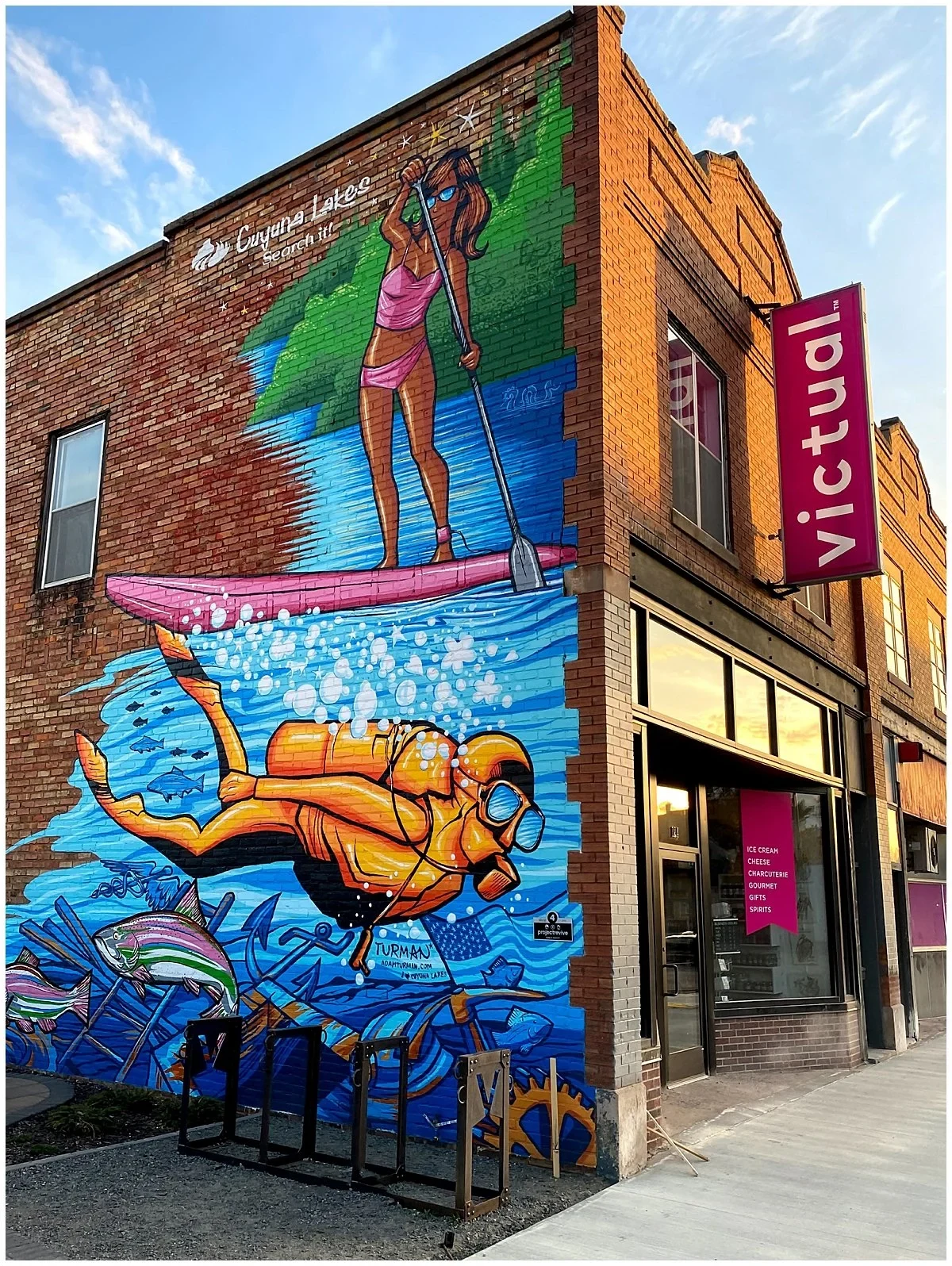
Downtown Crosby has transformed over the past decade from an antiques-and-vacancies main street into what the Star Tribune called a "mountain town in mountain-less Minnesota": restaurants, a cocktail bar, Cuyuna Brewing Company, a downtown loft hotel, indoor pickleball, and bike and kayak rentals. Trail advocates attribute roughly 15 new businesses mainly to the trail system, and an advocate-commissioned study projected further buildout could inject $20 million a year into the region (Star Tribune; Star Tribune, "Cuyuna 2.0").
Not just Crosby
Crosby anchors a small cluster of Cuyuna Range towns, all in Crow Wing County: Crosby (2,360), its immediately adjacent twin Ironton (576), and nearby Deerwood (526), Cuyuna (296), Riverton (118), and Trommald (99) — 2020 census figures. Crosby sits on Serpent Lake, with the Mississippi River about four miles north; the county seat, Brainerd, is about 15 miles southwest (U.S. Census QuickFacts).
These towns already share more than a name. The Crosby-Ironton School District serves all of them — the biggest shared institution. The Serpent Lake Sanitary Sewer District, a joint-powers entity, handles wastewater for Crosby, Ironton, Deerwood, and Cuyuna, with each city appointing two council members to its board. A century-old weekly newspaper, the Crosby-Ironton Courier, covers the whole cluster, and the towns market themselves jointly as "Cuyuna Adventure Town USA" (City of Cuyuna; cuyuna.com).
Public safety stays separate but cooperative: Crosby fields its own police department and a volunteer fire department that also serves surrounding townships by contract; Ironton keeps its own volunteer fire department, with mutual aid across the range. No formal merger of the two cities has ever been proposed — functionally, the shared school, sewer district, and branding mean the range towns already operate as one community for most day-to-day purposes.
Who runs the city
Crosby runs on a mayor-council system with a professional administrator handling day-to-day operations. Like most small Minnesota cities, that's a short list of people wearing a lot of hats.
| Role | Currently |
|---|---|
| Mayor | Diane Cash |
| City Council | Jim Traylor, Vern Lewis, Paul Heglund, Shawn Jarvela |
| City Administrator / Clerk / Treasurer | Trish Harren |
Council meets the 2nd and 4th Monday of each month, 6:00 p.m., at City Hall (2 Second St SW); agenda requests are due by noon the Wednesday prior. Meetings are open to the public. The mayor's seat and two council seats are on the November 3, 2026 ballot (city council packets and minutes).
Like a lot of towns this size, Crosby's administrative office has seen more turnover than usual in the past couple of years — not unusual for a city hall run by a handful of people rather than a large staff. The current administrator, Trish Harren, started in April 2025 after previously serving as county administrator in Mower and Itasca counties.
The 2026 election
The mayor's seat and two council seats — the whole table above except the administrator — are on the November 3, 2026 ballot. Crosby residents also vote that day on their state legislative and statewide races.
The Compass keeps a neutral, sourced guide to all of it — how and when to vote, what's on the ballot for Crosby's money, and every candidate's own stated positions side by side, with no endorsements. Read The Ballot →