
What this is
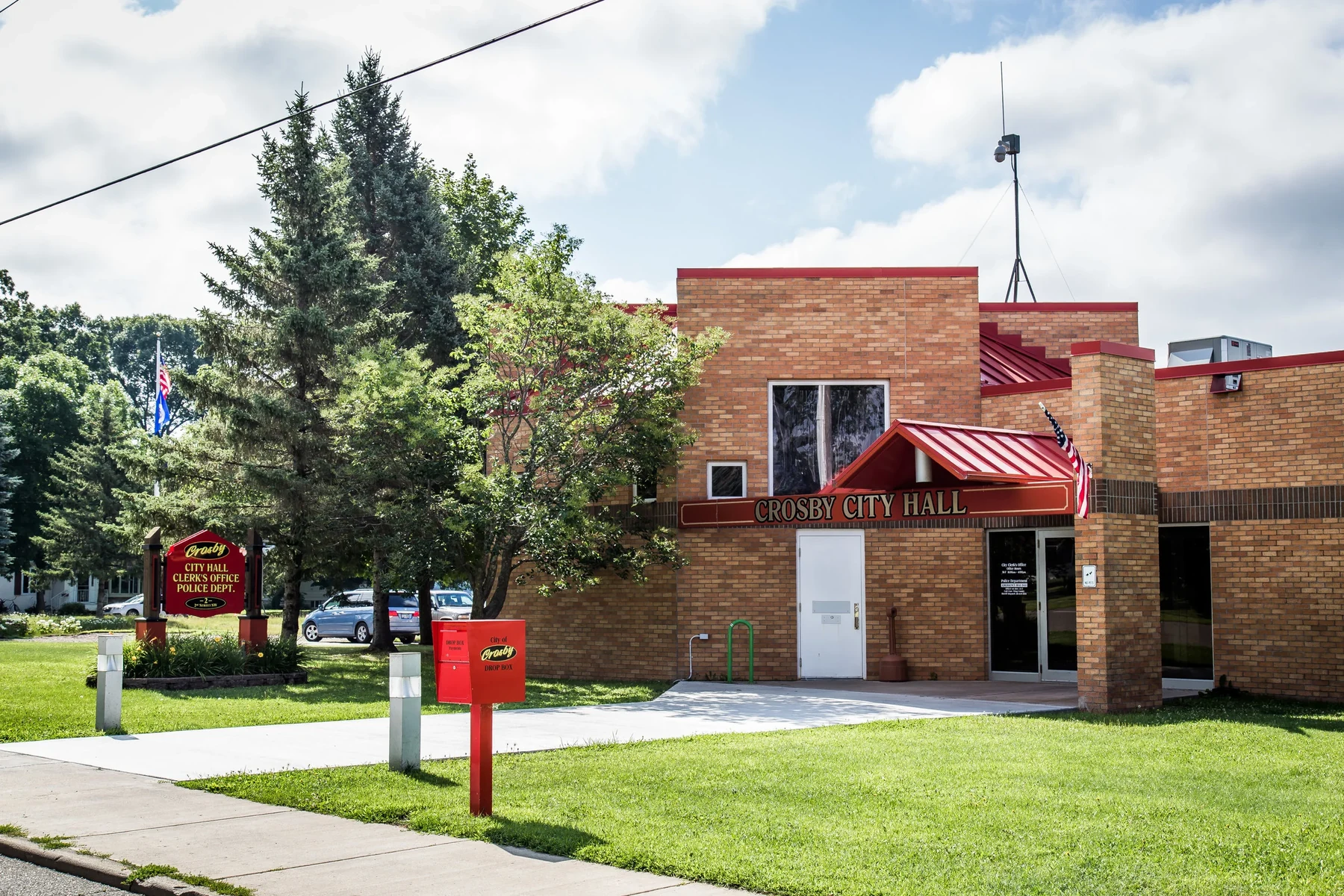
This page is a running inventory of public money that a city of 2,400 on the Cuyuna Range — or its fire department, or a local chamber, historical society, or trail group — can lawfully apply for. It is maintained by me, Jimmy Davidson, a Crosby resident, entirely from the funders' own published program pages. Nothing here is secret or speculative: every entry links to the funder's own page, and every dollar figure, match ratio, and deadline comes from that source.
Grant programs change their rules and dates every year, and some of next year's details simply haven't been published yet. Anywhere a date, cap, or percentage still needs a phone call to the program office, it's marked "(to confirm)" rather than stated as settled. If you spot an error or a program I've missed, the address at the bottom of the page reaches me.
Three words that show up constantly in grant-land, defined once:
The next 90 days
The near-term deadlines, September through December 2026. Anything marked "(to confirm)" follows the funder's published pattern from prior years but hasn't been announced for this cycle yet.
Sourcewell
Sourcewell is the Region 5 service cooperative headquartered in Staples, serving Cass, Crow Wing, Morrison, Todd, and Wadena counties. It is funded by fees from its national purchasing program, not taxes, and it puts millions back into this region every year. Crosby has already won here: a $50,000 Community Impact award in 2024 for IT and communication improvements, a Boost grant in 2025, and radios for the Crosby Fire Department in the December 2025 round (Ironton's fire department got breathing apparatus in the same round).
| Program | What it funds | Scale | Match | Deadline or cycle | Status |
|---|---|---|---|---|---|
| Community Impact Funds | Local-government projects with public benefit — technology, equipment, facilities; Crosby's 2024 IT award is the precedent | $20,000–$50,000 per project | — | Annual; FY2027 window via the funding portal (to confirm) | Annual cycle |
| Public Safety Impact Funds | Fire, police, ambulance, first response — project must involve at least one partner entity; a nine-agency Crow Wing County records platform won $250,000 in the first round | Up to $250,000 per entity per fiscal year | — | Annual; lottery-based review (window to confirm) | Annual cycle |
| Boost Funds | One small purchase per entity per year (equipment, supplies, training); Crosby used it for a hydration station in 2025 | Up to $2,000 | None | First-come from fiscal-year open (July) | First-come |
| Match Funds — Local Government | Listed in Sourcewell's funding portal; the 2024–25 pool ran out early from high demand — current cap and terms (to confirm) | (to confirm) | (to confirm) | Apply at fiscal-year open (July) | To confirm |
| Education Small Project Funding | For the Crosby-Ironton school district: small projects for districts of 1,250 students or fewer | Up to $2,500 | — | Annual | Annual cycle |
One structural note worth knowing: eighteen area cities are full voting members of Sourcewell and help select Community Impact awards at its annual Review Day — and none of the Cuyuna-range cities is currently among them. Voting membership is initiated by the city itself under Sourcewell's bylaws.
Iron Range Resources & Rehabilitation
IRRR is the state agency, funded by taconite production taxes, that invests in communities of the Taconite Assistance Area — and Crosby is inside it, via the Crosby-Ironton school district boundary defined in Minn. Stat. § 273.1341. This is not theoretical money: the city won $400,000 for alley infrastructure in 2024, and the agency's FY2027 budget grew to $76.9 million, up eight million from the year before. Most programs open July 1 and run until late May or until the money is committed — applying early in the fiscal year matters. Each application needs a city council resolution approving it.
| Program | What it funds | Scale | Match | Deadline or cycle | Status |
|---|---|---|---|---|---|
| Public Works | Sewer, water, streets, stormwater — and city halls, fire departments, and public safety buildings are named eligible uses | $9M FY27 pool; recent awards $100K–$600K | 1:1 (waiver possible for mine-pit cities with financial need, prior approval — to confirm) | Open since July 1, 2026; rolling until funds committed; pre-file ~Sept for the Dec board (to confirm) | Open now |
| Culture & Tourism | Tourism and cultural amenities, events infrastructure, heritage interpretation; a separate pot for trail equipment (max $50,000) | $2,500–$30,000; $900K FY27 pool | 1:1; in-kind not counted | FY27 round closed Aug 17, 2026; next pre-application ~July 2027 | Next cycle 2027 |
| Development Partnership | Research, planning, and development initiatives — e.g., a comprehensive plan update or downtown master plan | $2M FY27 pool; award ceilings not published (to confirm) | (to confirm) | July 1, 2026 – May 28, 2027 | Open now |
| Grant Writing Assistance | Reimburses a city's cost of preparing applications for outside (state, federal, or private) grants — strikingly underused: no city in the entire service area claimed it in FY25 | Up to $3,000 per project; FY27 pool (to confirm) | 1:1 per project | July – late May annually (FY27 to confirm) | To confirm |
| Housing | Infrastructure, site work, new construction, rehab, and repurposing buildings for housing; apply ~9 months before construction | Project-scale gap funding; $6M FY26 pool | Project-negotiated | FY27 cycle July 1, 2026 – May 28, 2027 (opening date sources conflict — to confirm) | To confirm |
| Residential Redevelopment | Demolition or deconstruction of blighted homes | Max $4/sq ft or 75% of demolition cost (lesser); +up to $5,000 for deconstruction; $225K FY26 pool | — | Opens July 1; rolling | Rolling |
| Commercial Redevelopment | Demolition and brownfield cleanup of commercial-industrial buildings; Crosby has used it before (North Country Café interior demolition) | Typically capped $200K per applicant; $1.5M pool | Not published | Rolling to May 28, 2027 | Rolling |
| Regional Trails | Design, engineering, and construction of trails; Crosby's beginner trail at Cuyuna Range Elementary came from this program | $1M FY26 pool (FY27 pool to confirm) | 1:1; in-kind not counted | Opens July 1; rolling | Rolling |
State of Minnesota
The state's big-ticket lanes for a city like Crosby are DEED's Small Cities Development Program and the Public Facilities Authority's water money — and Crosby's own recent record proves the pipeline works: the city was awarded $3.5 million for sewer and water main replacement in 2025 and a $309,000 lead service line replacement grant in December 2025. The DNR's recreation grant programs run on a late-winter annual cycle; the 2026 deadlines have passed, so the dates below are next-cycle expectations until the DNR posts them.
| Program | What it funds | Scale | Match | Deadline or cycle | Status |
|---|---|---|---|---|---|
| DEED Small Cities Development Program (SCDP) | Housing rehab, commercial rehab, and public facilities (sewer/water, streetscape, community centers) in small cities; tiny, low-income cities win $600K water and streetscape awards every year | Up to $600K single purpose; up to $1.4M comprehensive | No fixed match; committed leverage is scored | Preliminary proposal ~late Nov 2026 (to confirm); full application ~Apr 2027 by invitation | Confirm date |
| PFA Water Infrastructure Fund (WIF) | Affordability-based supplemental grants on top of state revolving-fund loans for water/wastewater projects — the program behind Crosby's 2025 awards | Capped at $5M or $20,000 per connection, whichever is less | — | Via the project priority list cycle: next PPL filings Mar 5 & Mar 12, 2027; use-plan requests due Jun 4, 2027 | Annual cycle |
| Point Source Implementation Grants (PSIG) | Wastewater projects required to meet stricter permit or water-quality requirements; requires clean-water priority-list placement | Up to $7M, covering 80% of eligible costs | 20% (grant covers up to 80%) | Via the same priority-list cycle | Annual cycle |
| DNR Volunteer Fire Assistance | Fire department protective equipment, hose, pagers and radios, rural water storage — for departments serving under 10,000 people | $1,000–$5,000; ~120–140 awarded statewide yearly | 50:50 | Sept 1 – Dec 1, 2026 | Opens Sept 1 |
| DNR Outdoor Recreation Grant Program | Local park acquisition and redevelopment — campgrounds, picnic shelters, fishing piers, swimming beaches are named eligible facilities (a fit for Memorial Park on Serpent Lake) | Up to $500,000 (project must be ≥$100K) | 50% local | 2026 round closed; next expected ~Mar 2027 (to confirm) | Next cycle 2027 |
| DNR Local Trail Connections | Short trail connections between where people live and destinations — e.g., downtown Crosby to the trailheads | $5,000–$250,000 (reimburses up to 75%) | 25% non-state cash | 2026 round closed; next expected ~Mar 2027 (to confirm) | Next cycle 2027 |
| DNR Regional Trail Grant Program | Trails of regional significance outside the metro — longer inter-city segments | $5,000–$300,000 | 25% non-state cash | 2026 round closed; next expected ~Mar 2027 (to confirm) | Next cycle 2027 |
| Federal Recreational Trail Program (via DNR) | Trail maintenance, trailside and trailhead facilities, wayfinding — volunteer labor can count toward the match | $2,500–$200,000 (equipment max $75,000) | 25% cash or in-kind | 2026 round closed; next expected ~Feb 2027 (to confirm) | Next cycle 2027 |
| MNHS Historical & Cultural Heritage small grants | Historic preservation, interpretation, collections care, oral history — a fit for the city-owned Croft Mine Historical Park and mining-heritage interpretation | Up to $20,000 (FY2026–27 cap); larger grants in annual rounds | — | Quarterly; next deadline Oct 9, 2026 | Quarterly |
| MBFTE training reimbursement | Every MN fire department gets an annual training reimbursement based on roster submission — not competitive; worth confirming Crosby captures its full allocation | Annual allocation; also up to $5,000/event for conferences | None | Annual roster submission | Standing |
| GMRPTC regional designation | Not a grant — the free application that would make a Crosby facility eligible for Parks & Trails Legacy money later. No Crosby facility is currently designated | Costs nothing but staff time; unlocks Legacy grants | — | Open cycle, no deadline | Open now |
Federal programs
USDA Rural Development is built for towns exactly Crosby's size — and smaller cities in the region carry eight-figure USDA water packages. Applications for the core programs are accepted year-round through the Baxter service center, about 15 minutes away. Crosby's numbers matter here: with a population under 2,500 and a median household income of roughly $43,250 (about half the state figure), Crosby clears the SEARCH program's income test comfortably. For the Community Facilities program, whether Crosby lands in the 75% or 55% grant tier turns on an income figure (to confirm with USDA's Baxter office, 218-829-5965) — though in Minnesota practice those grants top out around $50,000, with long-term direct loans doing the heavy lifting.
| Program | What it funds | Scale | Match | Deadline or cycle | Status |
|---|---|---|---|---|---|
| USDA SEARCH grants | Feasibility studies, preliminary design, and help developing funding applications for water/sewer projects — reserved for the smallest, lowest-income communities; Crosby qualifies on both tests | Up to $30,000, up to 100% of costs | None | Year-round | Eligible now |
| USDA Water & Waste Disposal Loans & Grants | Drinking water, sewer, solid waste, and storm drainage construction in communities of 10,000 or fewer — the main federal pipe-in-the-ground program | Loans up to 40-year terms; grants up to 75% of eligible costs for the lowest-income tier | Varies with grant share | Year-round | Year-round |
| USDA Community Facilities | Fire stations, fire trucks, ambulances, radios, city halls, and other essential facilities and equipment — USDA has funded fire trucks for MN cities Crosby's size | Grant tier 75% or 55% depending on income figure (to confirm with USDA's Baxter office); MN grants top out ~$50,000; direct loans up to 40 years | Balance beyond grant is loan-financed | Year-round | Year-round |
| FEMA Assistance to Firefighters Grants (AFG) | Fire department protective equipment, apparatus, health and wellness | $291.6M national pool (FY2025); cost share for towns under 20,000 is the lowest tier (historically 5% — to confirm) | Small (to confirm in next notice) | FY2025 round closed June 22, 2026; next window ~May 2027 | Next cycle 2027 |
| FEMA SAFER — Recruitment & Retention | Volunteer firefighter recruitment marketing, new-recruit training, and gear for new recruits — the match was fully waived again in FY2025, making this the best-aligned federal program for a volunteer department | $324M national pool (FY2025) | None (waived FY2025) | Closed June 22, 2026; next window ~May 2027 | Next cycle 2027 |
| NPS Rivers, Trails & Conservation Assistance | No money — free professional planning and design help for projects like a downtown-to-trailhead connection; communities and local governments apply annually | In-kind planning assistance | — | Annual application | Annual cycle |
Regional & philanthropic
The quiet story in this whole inventory: Crosby's single most under-appreciated funder is headquartered in Crosby. The Hallett Charitable Trusts give roughly $1 million a year, fund only the Cuyuna-range communities, and explicitly accept applications from tax-exempt governmental entities — meaning the city itself can apply. The annual deadline is September 1; with 2026's window effectively passed, the realistic next cycle is September 2027, which leaves a full year to build a quality application.
| Program | What it funds | Scale | Match | Deadline or cycle | Status |
|---|---|---|---|---|---|
| Initiative Foundation — Economic, Community & Workforce Development | Early-stage pilot and community-strengthening projects across 14 central-MN counties including Crow Wing; nonprofits, local governments, and schools eligible | Award sizes not published; recent comparable awards ran $5,000–$10,000 | — | Open Aug 18 – Sept 25, 2026; one more 2026 round planned | Open now |
| Initiative Foundation — Emerging Needs & Nonprofit Capacity-Building | For local nonprofits only (chamber, trail association, historical society) — capacity work such as strategic planning | Recent awards $5,000–$10,000 | — | 2026 round three: Oct 5 – Nov 6, 2026 | Opens Oct 5 |
| Hallett Charitable Trusts (E.W. Hallett Trust) | Program, general operating, matching-fund, and capital grants for the Cuyuna Lakes communities — Crosby, Ironton, Cuyuna, Deerwood, Riverton, Trommald, Rabbit Lake, Wolford; has funded area trail wayfinding; application guidelines here | ~$1M/year combined giving; E.W. Trust distributed $646,930 in its latest fiscal year | — | Sept 1 annually; next realistic cycle Sept 1, 2027 | Target 2027 |
| Blandin Foundation — Rural Minnesota round | Statewide (non-metro) competitive round: community wealth-building and rural placemaking; city governments eligible; first-time applicants prioritized. Note: Blandin's Small Communities Grants are Itasca-area only — Crosby is not eligible for that local round | 2026 round: 46 grants totaling $4.54M | — | Next round expected ~Jan 2027 (to confirm) | Next cycle 2027 |
| Blandin Community Leadership Program | Not cash — leadership training for a ~24-resident community cohort; the community (not individuals) applies; an open call launched May 2026 | Training program, no direct grant | — | Open call underway; demand exceeds slots | Open call |
| Five Wings Arts Council | State Legacy arts money for Region 5 (including Crow Wing County); government units are eligible — e.g., bandshell programming, public art on trail connections. Community Arts Access up to $5,000 (match required); Small Grants up to $1,000 (rolling, no match) | Up to $5,000 (project grants) | Required for project grants; none for small grants | Quarterly: Jan 15 / Apr 15 / Jul 15 / Oct 15 (Oct 15, 2026 to confirm) | Confirm date |
| Compeer Financial Emergency First Responder Grant | Rural volunteer fire, rescue, and ambulance equipment; Crow Wing County's inclusion in Compeer's 144-county territory (to confirm) | Max $7,500 (2026) | — | Apr 15 – May 31 annually; 2026 closed — target Apr 2027 | Next cycle 2027 |
| Explore Minnesota Tourism Grant | Destination marketing by chambers and visitor bureaus — a fit for the Cuyuna Lakes Chamber marketing the trail economy (cities themselves capped at $2,000) | Max $11,000 | 1:1 cash | Spring window annually (to confirm) | Next cycle 2027 |
Corrections & what's next
This list changes monthly — funders publish new cycles, close pools early, and revise caps every year, and this page will be refreshed as they do. If you spot an error, a stale date, or a program that belongs here and isn't, write me: jimmy@agenticpersonnel.com. Corrections make the list better for everyone.
Three companion pages give this inventory its context: The Proposal explains how the city can actually work this list without adding staff, The Numbers walks through the city finances that make every one of these dollars matter, and Room to Grow covers the development-side tools — TIF, redevelopment grants, business-attraction programs — that this inventory doesn't include.